
Why Your Skincare Stops Working After a Few Months And How to Fix It Safely
-
admin@zenska.ph
- Posted on

Why skincare stops working is a question I found myself desperately googling at 2 AM, staring at bottles that had given me glowing skin just months before. Now? My face looked dull, congested, and irritated. I felt like I’d failed at something as basic as washing my face.
Table of Contents
Here’s the truth no one tells you upfront: This doesn’t mean your skin is bad. When skincare stops working, it’s not because your skin became immune to good ingredients. Your skin doesn’t develop resistance like bacteria do to antibiotics. What’s actually happening is either barrier damage, product quality issues, or environmental changes your routine can’t handle anymore.
I wish someone had explained this to me before I wasted money buying more products thinking that was the solution.
| Problem | What’s Really Happening | Safe Fix |
|---|---|---|
| Skincare stopped working | Barrier damage from overuse | Simplify routine |
| Breakouts after months | Over-exfoliation stripping skin | Reduce actives |
| No glow | Dehydration masking results | Barrier repair |
| Random irritation | Fake products with unknown ingredients | Use verified skincare |
Understanding Why Skincare Stops Working: The Real Science
Let’s destroy the biggest myth first: your skin doesn’t build tolerance to retinol, vitamin C, or niacinamide the way your body builds tolerance to caffeine. That’s not how skin biology works.
When skincare stops working after consistent use the actual culprits are:
- Compromised skin barrier from excessive product layering
- Over-exfoliation disguised as glowing skin
- Seasonal shifts requiring different formulations
- Counterfeit or degraded products losing potency
- Hormonal changes affecting how your skin responds
Think of your skin barrier like a roof on your house It protects everything underneath. You can polish and treat that roof but if you scrub it aggressively every single day eventually you’ll damage the shingles. Then rain gets in and suddenly nothing you do helps because the fundamental structure is broken.
That’s why skincare stops working for most people.
The Over Exfoliation Trap: Why Your Skincare Stopped Working Suddenly
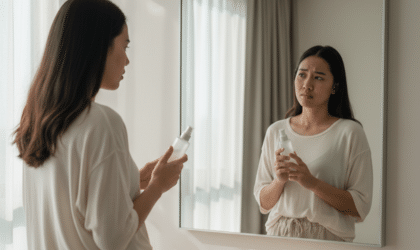
Most people don’t realize they’re destroying their skin barrier until it’s too late. You might be combining:
- AHA or BHA toner every morning
- Retinol or retinoid every night
- Vitamin C serum with additional acids
- Cleansing brushes or physical scrubs
- Weekly chemical peel masks
Each product promises results Marketing tells you more is better But here’s what actually happens:
Week 1-8: Your skin looks incredible, You’re glowing, Texture improves, You think you’ve found your holy grail routine.
Week 9-12: Small changes appear, Products sting slightly, Your skin feels tight, You add more moisturizer.
Week 13: Everything falls apart Random breakouts Rednes, Sensitivity to products that never bothered you Makeup looks cakey Your skin feels dry no matter what you use.
This is textbook barrier damage and it’s the number one reason why skincare stops working.
Signs Your Barrier Is Screaming for Help
Your skin gives you warnings before it completely breaks down:
- Products burn or sting when they never did before
- Your skin feels tight 10 minutes after moisturizing
- Unexplained breakouts in unusual areas
- Shiny-looking skin that feels dehydrated underneath
- Redness that appears and disappears randomly
- Products sit on top of your skin instead of absorbing
- Your skin looks dull despite using brightening products
- Fine lines seem more pronounced suddenly
This doesn’t mean your skin is bad, Your skin is literally begging you to stop and repair.
Why Skincare Stops Working: The Product Quality Problem
Here’s the uncomfortable reality: the skincare industry has a massive counterfeit problem and it’s getting worse with online shopping.
I’ve personally tested products from unauthorized Amazon sellers that looked identical to the real thing. Same packaging, same bottle, same label. The texture and smell? Completely different. The results? Non-existent.
Red Flags Your Product Might Be Fake
Watch for these warning signs:
- You bought it significantly below retail price
- The seller isn’t on the brands authorized retailer list
- Packaging has slight differences from official photos
- Texture or scent varies between bottles
- Product separated or looks grainy
- Your skin reacted differently than reviews described
- Results were amazing initially then completely stopped
Counterfeit skincare often contains:
- Little to no active ingredients (explaining why skincare stops working)
- Unlisted fillers and preservatives
- Contaminated or expired ingredients
- Heavy metals and toxic substances
- Wrong pH levels that damage your skin
This isn’t just about wasted money Fake products can cause serious, long-term skin damage.
Seasonal Changes: The Hidden Reason Why Skincare Stops Working
Your skin in humid July is fundamentally different from your skin in dry January. Temperature, humidity, indoor heating and air conditioning all change what your skin needs.
That lightweight gel moisturizer perfect for summer might leave your skin dehydrated when winter hits and you’re running the heater 24/7. Your beloved retinol might become too harsh when cold weather already compromises your barrier.
Common seasonal shifts:
- Winter: skin needs more occlusive moisturizers and barrier protection
- Summer: skin requires lighter textures and more hydration
- Spring/Fall: transition periods where you adjust gradually
- Indoor heating: strips moisture and damages barriers
- Air conditioning: dehydrates skin and affects oil production
The solution isn’t always new products Sometimes it’s adjusting how and when you use what you already have Use your retinol less frequently in winter Layer a facial oil over moisturizer when it’s cold Switch to a lighter SPF in humid weather.
How to Fix Skincare That Stopped Working: The Repair Protocol
When your skincare stops working your instinct screams buy more products! Don’t That’s exactly what damaged your skin in the first place.
Step 1: Immediate Simplification (Weeks 1-4)
Strip everything back to absolute basics:
Morning:
- Gentle non-foaming cleanser
- Hydrating toner or thermal water
- Simple moisturizer with ceramides
- Broad-spectrum SPF 30+
Evening:
- Same gentle cleanser
- Same hydrating toner
- Same simple moisturizer
- Optional: thin layer of facial oil if very dry
No actives. No exfoliants. No serums. No masks. No tools.
I know this sounds boring You might panic watching your expensive products sit unused But boring is what damaged skin needs You’re giving your barrier uninterrupted time to rebuild its protective structure.
Step 2: Active Barrier Repair (Weeks 2-6)
Once you’ve simplified, actively support repair with these ingredients:
Ceramides– the actual mortar between your skin cells Without adequate ceramides your barrier can’t function Look for products with ceramide 1, 3, and 6-II.
Niacinamide at 2-5%– strengthens barrier function, reduces water loss and calms inflammation. Higher percentages aren’t better and may irritate compromised skin.
Centella asiatica (cica)- reduces inflammation and supports healing Particularly helpful if barrier damage caused sensitivity.
Panthenol (provitamin B5)– humectant that attracts and holds water while supporting barrier repair.
Cholesterol and fatty acids– work with ceramides to rebuild barrier structure. The ratio matters: look for 1:1:1 ceramide: cholesterol: fatty acids.
You don’t need separate products for each ingredient. Choose a good barrier repair moisturizer containing several of these and use it consistently twice daily.
Step 3: Careful Reintroduction (Week 6+)
After your skin feels calm, bounce-back and healthy again you can slowly add actives. Emphasis on slowly.
Week 6-8: Introduce ONE active ingredient
- Start with 2 times per week
- Use on non-consecutive nights
- Monitor for any irritation signs
- Don’t increase frequency yet
Week 9-10: If skin tolerates well
- Increase to 3 times per week
- Continue monitoring
- Still using gentle routine other days
Week 11+: Consider adding second active
- Only if first active is completely stable
- Alternate nights (never same night)
- Keep frequency low initially
This process feels slow. You’ll be tempted to rush. Don’t. The reason why skincare stops working in the first place is usually because we pushed too hard, too fast.
Preventing Why Skincare Stops Working: Long-Term Strategies
Buy Only From Verified Sellers
This is non-negotiable if you want products that actually work. The $15 you save buying from a random seller isn’t worth risking fake products.
Safe sources:
- Brands official website
- Sephora, Ulta, Dermstore, Nordstrom
- Dermatologist offices
- Verified pharmacy chains (CVS, Walgreens, Target)
- Authorized retailers listed on brand websites
Verification steps:
- Check batch codes on CheckFresh or CheckCosmetic
- Compare packaging to official brand photos closely
- Read recent reviews mentioning product consistency
- Verify the seller is on the brand’s authorized list
- Report suspicious sellers to the platform
Create a Sustainable Rotation System
Instead of hammering your skin with actives daily forever, create breathing room:
Monday/Wednesday/Friday: Active ingredients (retinol, AHA, BHA) Tuesday/Thursday/Saturday: Hydration and barrier support only Sunday: Minimal routine or gentle treatment mask
This prevents the over-exfoliation that causes skincare to stop working while keeping your skin responsive to actives. Your skin cells need recovery time to implement the changes actives trigger.
Listen to Early Warning Signals
Your skin whispers before it screams. Pay attention to:
- Slight tightness lingering after moisturizer
- Products taking noticeably longer to absorb
- Makeup not blending as smoothly as usual
- Mild redness taking longer to fade than normal
- Slight stinging from products that never bothered you
These are early warnings that your barrier is getting stressed When you notice them immediately scale back actives for a week. This prevents minor irritation from becoming full barrier damage.
The Truth About Skincare Cycles and Routine Changes
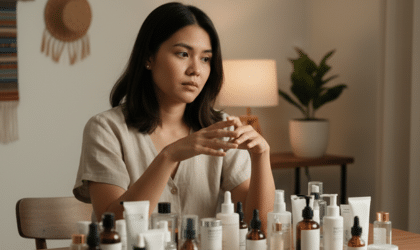
Some influencers claim you should change your entire routine every 3-6 months to keep skin guessing or prevent tolerance This advice is nonsense rooted in marketing not dermatology.
Your skin doesn’t need surprise. It needs consistency and appropriate care.
What should stay consistent:
- Gentle cleanser that doesn’t strip your skin
- Barrier-supporting moisturizer with ceramides
- Broad-spectrum SPF 30+ every single morning
- Overall routine structure and timing
What can adjust based on needs:
- Active ingredient frequency (more in summer, less in winter)
- Moisturizer weight (heavier in cold weather)
- Addition of oils or occlusives when needed
- Specific treatment serums for changing concerns
The foundation stays stable You adjust variables based on real changes in your skin’s needs not arbitrary timelines.
When Skincare Stops Working: What Actually Needs to Change
Sometimes products genuinely stop meeting your needs. Change your routine when:
Legitimate reasons:
- Your skin goals shift (acne treatment→ anti-aging focus)
- Life changes affect your skin (pregnancy, menopause, new medication)
- You develop a true allergy to an ingredient
- The brand reformulates and the new version doesn’t work
- You confirmed the product is fake or expired
- Seasonal needs require different formulations
Bad reasons to change:
- You’re bored with your routine
- You saw an ad for something new and exciting
- An influencer recommended their latest partnership
- You think variety is inherently beneficial
- You feel pressure to have a 10-step routine
Building a Routine That Won’t Stop Working
The Unchanging Foundation
These three products should rarely change once you find ones that work:
1. Gentle cleanser– removes dirt, oil, and pollution without stripping your barrier Should leave skin feeling clean but not tight.
2. Barrier-supporting moisturizer– contains ceramides, cholesterol and fatty acids to maintain barrier health. This is your insurance policy against why skincare stops working.
3. Broad-spectrum SPF 30+– prevents the UV damage that causes 80% of visible aging Non-negotiable every morning.
When you find versions of these three that work for your skin stick with them. This isn’t boring- it’s the foundation that allows everything else to work.
The Strategic Variables
These change based on current needs:
Active serums:
- Retinol/retinoids for cell turnover and anti-aging
- Vitamin C for brightening and antioxidant protection
- Niacinamide for barrier support and oil regulation
- Azelaic acid for redness and texture
Treatment products:
- Targeted acne treatments when needed
- Hydrating essences during dry periods
- Chemical exfoliants used strategically
Occasional boosters:
- Sheet masks for hydration
- Treatment masks monthly
- Facial oils for extra barrier support
Keep the foundation stable, adjust the variables mindfully.
Why Your Skincare Stopped Working: The Medical Reality Check
If you’ve simplified, waited 6-8 weeks repaired your barrier bought verified products and your skin still struggles- see a dermatologist. Sometimes the reason why skincare stops working is that:
- You have an underlying condition needing prescription treatment (rosacea, perioral dermatitis, seborrheic dermatitis)
- Your skin issue isn’t what you think it is (what looks like acne might be fungal)
- You need prescription-strength solutions (tretinoin, hydroquinone, antibiotics)
- An internal health issue is affecting your skin (hormones, thyroid, nutrition)
- You’re experiencing medication side effects
There zero shame in getting professional help A dermatologist can diagnose what actually happening instead of you guessing with increasingly expensive products.
Final Thoughts: Why Skincare Stops Working and What to Do About It
When skincare stops working it’s almost never because your skin developed tolerance to good ingredients Usually, you’ve damaged your barrier through well- intentioned over exfoliation your products are counterfeit or degraded or environmental changes require routine adjustments.
The solution isn’t buying more products or constantly switching everything up. It’s simplifying ruthlessly repairing your barrier with ceramides and gentle care and being more strategic about active ingredient use.
This doesn’t mean your skin is bad. Your skin is communicating that something needs adjustment Listen to those signals give your barrier the support it needs and commit to buying only from verified sellers.
Your skin wants to work with you Treat it with patience and respect and you’ll get better long- term results than chasing every new miracle product that promises to transform your face overnight.
The best skincare routine isn’t the one with the most steps or the most expensive products It’s the one your skin can tolerate consistently that repairs and protects your barrier and that you’ll actually stick with for months and years.
Zenska
If your skincare feels like it stopped working it may not be your skin- it may be what you’re using.
At Zenska, we help remove the guesswork by offering only verified, authentic skincare products that support your skin long-term not just for a few weeks.
Build a routine that stays effective. Choose authenticity. Choose Zenska.
Frequently Asked Questions
Why does skincare stop working after a few months?
When skincare stops working after a few months it’s typically due to barrier damage from over exfoliation rather than your skin building tolerance to ingredients. Using too many active products simultaneously like retinol, AHAs, vitamin C, and physical exfoliants compromises your skins protective barrier. This damage makes products less effective and can cause sensitivity, breakouts and dehydration. Additionally counterfeit products seasonal changes or expired formulations can make it seem like your skin stopped responding.
Can fake skincare cause long-term skin damage?
Yes, counterfeit skincare can cause serious long-term damage because fake products often contain unlisted ingredients, heavy metals, wrong active concentrations or contaminated substances. These unknown ingredients can trigger persistent allergic reactions, cause hyperpigmentation, damage your moisture barrier, lead to scarring and create sensitivity that lasts months or years. The inconsistent formulations also explain why skincare stops working suddenly- fake products may initially seem effective but lack the quality control and proven ingredients of authentic products.
Should I change my skincare routine regularly?
No, you shouldn’t change your core skincare routine regularly without legitimate reason. Your cleanser barrier-supporting moisturizer and SPF should remain consistent because your skin needs stability to show real improvement. Only adjust your routine when your skins actual needs change due to seasons, hormones new skin goals or life circumstances- not because you’re bored or following trends. Constant changes prevent you from identifying what truly works and understanding why skincare stops working when it does.
How long does it take to fix damaged skin?
Repairing damaged skin typically takes 4-6 weeks of simplified consistent skincare focused on barrier repair with ceramides, niacinamide and gentle products. During this recovery period, avoid all active ingredients- no retinol, acids or exfoliants- while using only gentle cleanser, barrier repair moisturizer and SPF. Since your skins natural renewal cycle is approximately 28 days you need at least one full cycle for visible improvement Severe barrier damage may require 8-12 weeks before carefully reintroducing actives.
Is it safe to restart skincare from scratch?
Yes, restarting with a minimal routine is often the safest and most effective approach when skincare stops working or shows signs of barrier damage. Begin with only three products- gentle cleanser, ceramide moisturizer and SPF- for at least four weeks to let your skin reset and repair completely. Once your skin is calm, healthy and no longer reactive, slowly reintroduce one active ingredient at a time, waiting two full weeks between additions. This methodical approach prevents overwhelming your barrier and helps you identify which products actually benefit your skin.



 Skin
Skin  Hair
Hair  Make Up
  Bath & Body
  Natural
  Mom & Baby
  Men
Men  Fragrance
  Lingerie & Accessories
  Appliances
  Body Care
  Cleansers
  Eye Care
  Hands & Feet
  Kits & Combos
  Lip Care
  Hair Care
  Hair Kits & Combos
  Hair Styling
  Shop By Concern
  Shop By Hair Type
  Tools & Accessories
  Eyes
Eyes  Face
Face  Lips
Lips  Makeup Kits & Combos
  Multi-functional Makeup Palettes
  Nails
Nails  Bath & Shower
  Body Care
  Female Grooming
  Feminine Hygiene
  Hands & Feet
  Kits & Combos
  Aromatherapy
  Body Care
  Hair
Hair  Makeup
  Nailpolish
  Skin
Skin  Baby Accessories
  Baby Hygiene
  Diaper Essentials
  For Moms
  Gifting
  Nursing & Feeding
  Bath & Body
  Beard Care
  Fragrance
  Hair Care
  Health Supplements
  Sexual Wellness
  Aromatherapy
  Fragrance Kits & Combos
  Men Fragrances
  Shop By Fragrance Family
  Top Brands
  Women Fragrance
  Bags
Bags  Footwear
  Home
Home  Lingerie
  Sunglasses
  Watches
  Face Skin/Tools
  Hair Removal Tools
  Hair Styling Tools
  Massage Tools
  Oral Care
  Pro Hair Styling
